


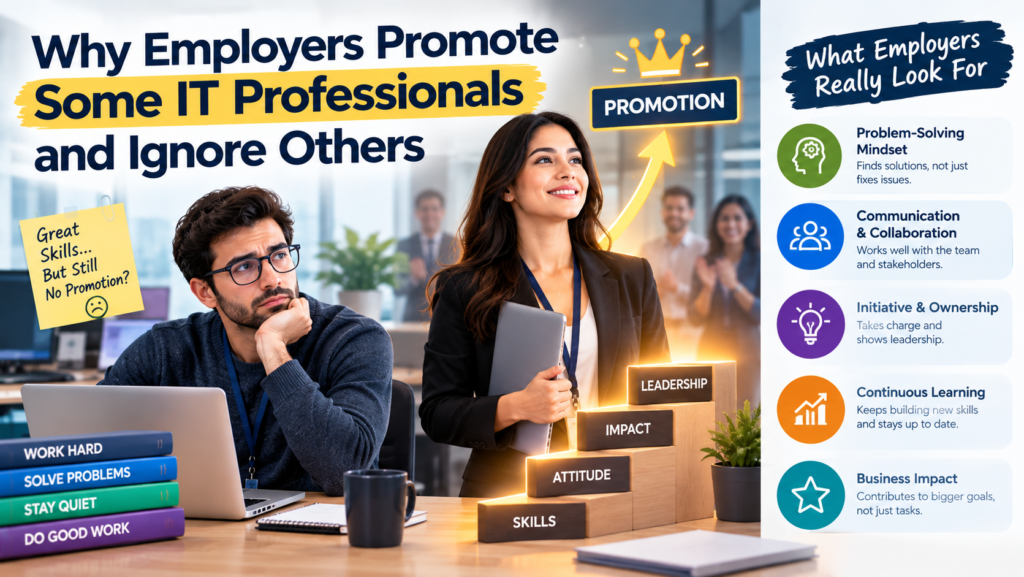
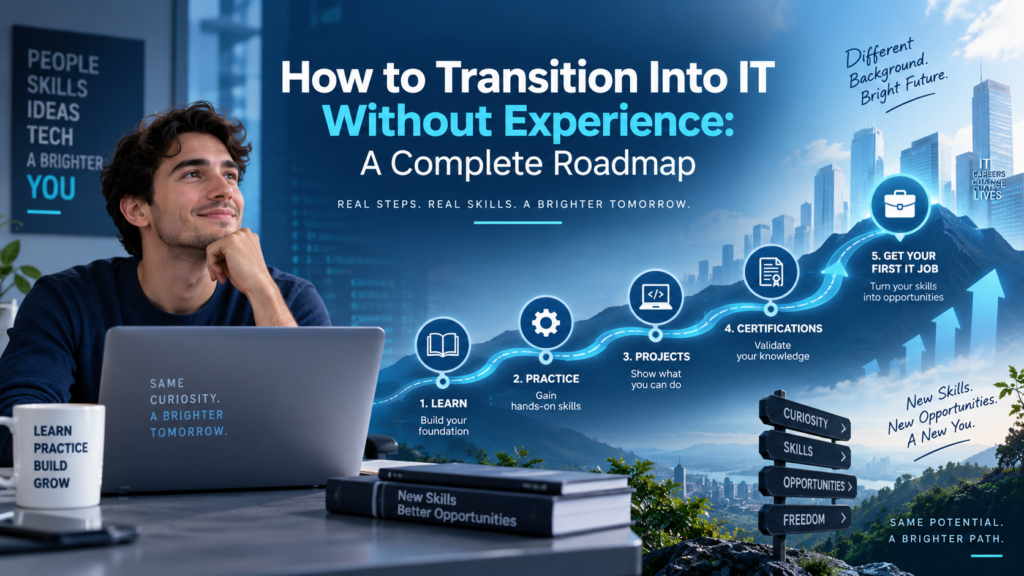
Ten years in IT used to mean job security. Now it’s not unusual to see a senior professional with a decade of experience lose out to someone five years younger with half the tenure, simply because their skills are current and workplace-ready. This is the IT skills crisis in action: it isn’t a shortage of experienced people, it’s a shortage of experienced people whose skills haven’t gone stale.
If that feels uncomfortably close to home, you’re not alone, and you’re not behind for good. This guide breaks down why the IT skills crisis is hitting experienced professionals hardest, and exactly what employers are looking for from IT talent right now.
Why the IT Skills Crisis Is Hitting Experienced Professionals Hardest
The World Economic Forum’s Future of Jobs Report 2025 found that close to 40% of core job skills are expected to change or become outdated by 2030, with businesses citing skills gaps as the single biggest barrier to digital transformation. The same report projects that roughly a third of work tasks will be automated within the decade.
That pace of change hits experienced professionals disproportionately hard. Someone five years into their career has typically refreshed their skills more recently than someone fifteen years in, simply through more frequent job changes and study. Long-tenured professionals, often the most capable people in the room on legacy systems, can find their deepest expertise becoming the least in-demand skill on the market.
Signs You’re Falling Behind in the IT Skills Crisis
- Your strongest skills are tied to tools or platforms your organisation is actively phasing out.
- You haven’t completed a hands-on certification or course in the last two to three years.
- Job ads in your field now list cloud, AI, or automation skills you haven’t touched.
- You’re applying for roles similar to your last one and getting fewer responses than expected.
- Younger or newer colleagues are being pulled into modernisation projects ahead of you.
What Employers Actually Want From IT Professionals Now
Employers aren’t looking to replace experience, they’re looking for experience paired with current, demonstrable capability. Here’s what consistently separates candidates who get hired from those who get passed over.
1. Cloud and Modern Infrastructure Skills
Even IT professionals with deep on-premises experience are expected to show working knowledge of platforms like AWS or Azure. Legacy infrastructure expertise still matters, but rarely stands alone anymore.
2. Cyber Security Awareness Across Every Role
Security is no longer siloed to a specialist team. Employers increasingly expect baseline cyber security literacy from network engineers, developers, and IT support staff alike.
3. Data and AI Literacy
You don’t need to be a data scientist, but understanding how data analytics and AI tools fit into your role is now a genuine hiring differentiator, particularly for professionals moving into more senior or strategic positions.
4. Recent, Hands-On Certification
A certification from a decade ago signals history, not current capability. Employers respond far more strongly to recent, practical, project-based training that proves you’re up to date.
5. Adaptability Over Tenure
Years of experience matter less than the ability to show you’ve adapted before and can do it again. Framing your career around continuous learning, not just accumulated years, changes how employers read your resume.
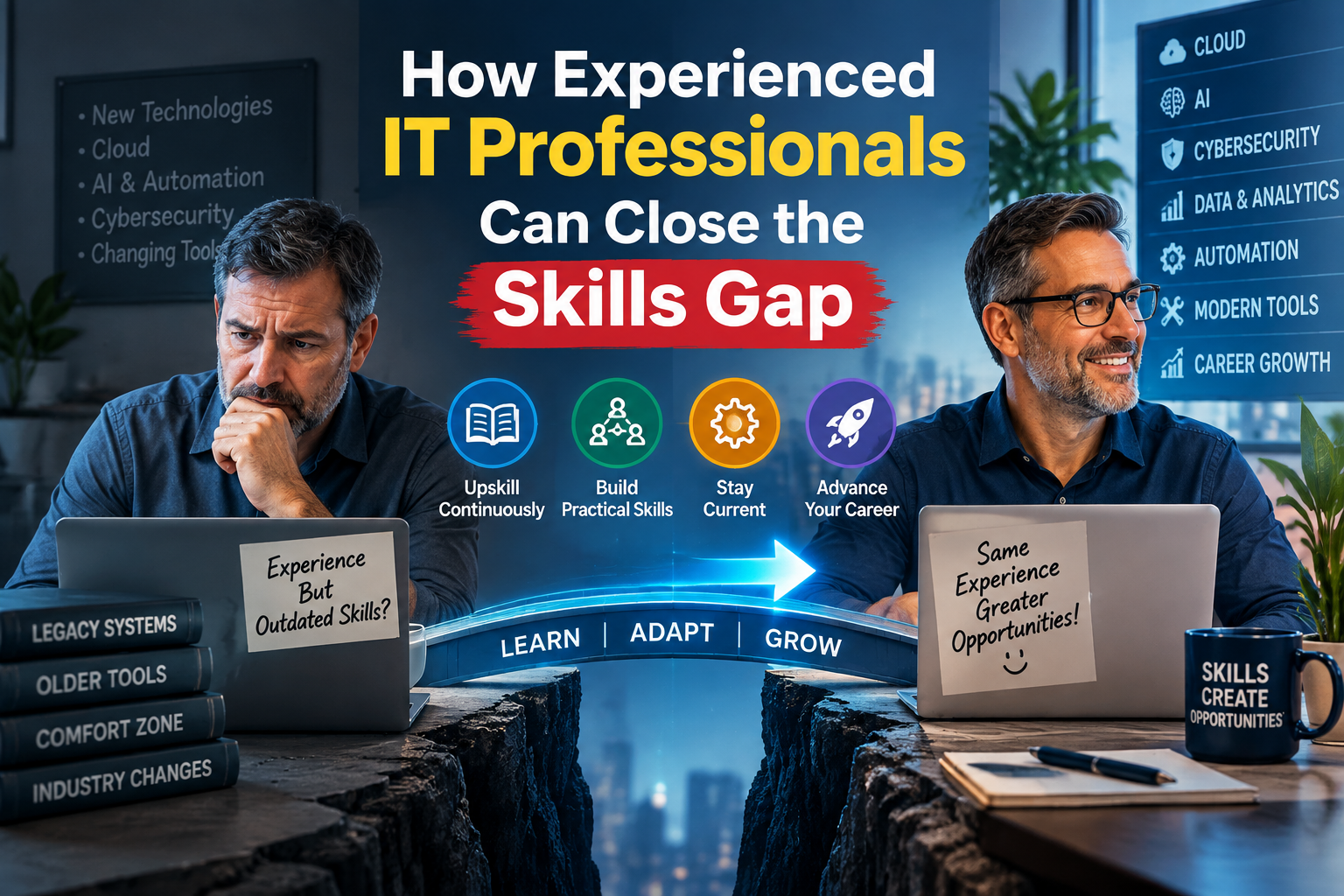
How Experienced IT Professionals Can Close the Skills Gap
Closing the gap doesn’t mean starting over. It means targeting the specific, current skills employers are screening for, through structured, hands-on training rather than scattered self-study.
IT Courses in Australia are built around exactly this problem: practical, certification-focused training in the areas employers are actively hiring for, delivered through flexible online, classroom, and live virtual formats that fit around a working career.
Depending on where the gap sits in your current skill set, a few pathways are especially relevant for experienced professionals looking to modernise:
- AWS Technical Essentials for professionals building foundational cloud capability
- Cyber Security Course for closing the security literacy gap employers now expect
- CCNA Certification Training for updating networking fundamentals against current standards
- Artificial Intelligence (AI) Essentials for building working AI and automation literacy
- Business Analyst Certification for professionals moving toward strategic, business-facing IT roles
- SQL Database Training for refreshing core data fundamentals
- Web Development Course for adding modern, practical build skills to an existing technical background
IT Courses Across Australia
Because employer demand and in-demand skills differ from city to city, training close to your target market matters. IT Courses are delivered across major Australian cities, with flexible weekday, evening, weekend, and live online options.
- Melbourne, supporting professionals across Victoria’s finance, government, and technology sectors
- Sydney, with strong demand across cloud, cyber security, and corporate IT roles
- Brisbane, where infrastructure and technology hiring continues to expand
- Perth, supporting resources, engineering, and IT modernisation projects
- Adelaide, with growing demand across defence, manufacturing, and technology
- Canberra, where government employers place high value on current, verified IT skills
How to Future-Proof Your IT Career
- Audit your current skill set against recent job ads in your specialty, and target the gaps directly.
- Prioritise hands-on, project-based training over passive study, employers want proof you can apply it.
- Refresh at least one certification every two to three years to keep your profile current.
- Build baseline literacy in cloud, cyber security, and data or AI, even outside your core specialty.
- Reframe your resume around adaptability and recent learning, not just years of tenure.
Frequently Asked Questions
What is the IT skills crisis?
It refers to the widening gap between the skills employers need in a rapidly changing technology landscape and the current, verified skills many IT professionals hold, particularly as tools, platforms, and standards shift faster than career-long expertise can keep pace.
Why do experienced IT professionals fall behind less experienced ones?
Experienced professionals often refresh their skills less frequently than newer entrants, and deep expertise in legacy systems can become less valuable as organisations modernise their technology stacks.
What IT skills are most in demand right now?
Cloud computing, cyber security, data analytics, and working AI literacy are consistently the most requested skills across current job postings, alongside strong fundamentals in networking and databases.
Ready to Close Your Own Skills Gap?
If you’re ready to modernise your IT skill set and stay ahead of the IT skills crisis, explore the courses or get in touch with the team to find the right pathway for your experience level and city.
Explore IT Courses | Contact Us | Call 1300 649 299