


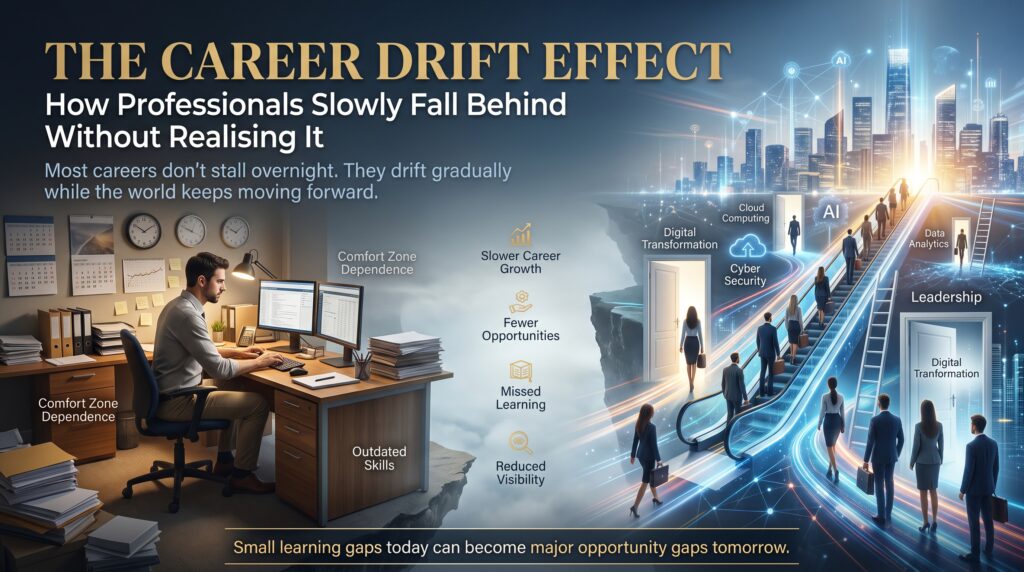


Being good at the wrong technology is one of the most dangerous traps in an IT career, because it feels like success. You know your platform inside out, colleagues ask you for help, your reviews are glowing and your salary looks fine. Then a restructure arrives, a vendor changes direction or a new tool makes your specialty irrelevant, and you discover that years of deep expertise are worth far less on the open market than you thought. If you work in IT in Sydney, Melbourne, Brisbane, Perth, Adelaide or Canberra, understanding this risk now is far cheaper than learning it during a layoff.
In this guide we explain how being good at the wrong technology quietly damages careers, the warning signs to watch for, how to choose technologies worth betting on, and a practical 90-day plan to future-proof your skills. It is written for developers, system administrators, support engineers, analysts and anyone whose value is tied to a specific tool or platform.
What Does Being Good at the Wrong Technology Actually Mean?
It means your deepest expertise sits in a tool, platform or approach that employers are using less, paying less for or replacing. The skill is real and the knowledge is hard-won, but demand is shrinking, and that is what makes someone good at the wrong technology rather than the right one. It could be an ageing on-premises system, a niche vendor product, a framework that lost momentum or a manual process that automation is absorbing.
The danger is that nothing feels wrong. Because you are still the expert, you are still useful at work today, which is exactly how a person stays good at the wrong technology without noticing. Meanwhile the market, which decides what your skills are worth, is moving on. Being good at the wrong technology creates a gap between your internal reputation and your external value, and that gap only becomes visible when you need a new job.
Why Smart People Fall Into the Trap
Nobody sets out to build a career on a fading platform. The pattern usually forms slowly, one sensible decision at a time: you take the project your team needs, you become the person who knows the system and you stay because leaving would waste what you know. Each step is reasonable, which is why the trap is so hard to see from the inside.
Expertise Feels Like Security
Mastery brings praise, confidence and quick wins, which is why so many people stay good at the wrong technology for years. Starting something new means being a beginner again, so it keeps losing against the comfort of what you already know. Almost every IT professional has been good at the wrong technology at some point, so there is no shame in it, only a cost to ignoring it.
Your Employer Rewards Today, Not Tomorrow
Managers measure you on keeping current systems running. They rarely tell you that the system itself is being phased out, or that the skills they value today will matter less in three years.
Technology Cycles Move Faster Than Career Plans
Cloud platforms, automation, security requirements and artificial intelligence keep reshaping what IT teams need. Resources such as the Stack Overflow Developer Survey show how quickly tool popularity shifts, while Jobs and Skills Australia tracks changing demand for occupations and skills across the country.
Sunk Cost Keeps You Loyal
After years invested in one technology, walking away feels like wasting that effort. In reality, the concepts you learned transfer, but only if you deliberately carry them into newer tools.
8 Warning Signs You May Be Good at the Wrong Technology
- Job ads for your core skill are shrinking or concentrated in a few legacy employers.
- Recruiters ask about tools you have never used, not the ones you know best.
- Your employer is migrating away from the platform you specialise in.
- Your daily work is mostly maintenance, with little new building.
- Junior colleagues are learning different tools from you.
- Vendor support, community activity or learning resources for your technology are fading.
- Your certifications are expiring or being retired.
- You cannot describe your value without naming one specific product.
If four or more of these apply, it is time to plan a transition before the market forces one.
The Real Cost of Being Good at the Wrong Technology
The financial cost shows up in stalled salary growth, longer job searches and forced pay cuts when you are made redundant. The career cost is subtler: you are overlooked for projects that use modern tools, so your experience gap widens every year.
There is also a confidence cost. People who suddenly feel their skills are outdated often react by assuming they are not capable of learning something new, which is almost never true. The problem is direction, not ability.
How to Choose Technologies Worth Betting On
You cannot predict the future with certainty, so the goal is not to find the perfect technology. It is to make well-informed bets, spread your risk and keep learning, so that no single product decides your career.
Read the Market, Not the Hype
Collect 20 job advertisements for the role you want in two years. Count which technologies appear most often. Frequency is the market telling you what it pays for.
Favour Fundamentals and Platforms Over Single Products
Skills in networking, security, databases, cloud platforms and data are portable across employers and tools. A strong foundation lets you pick up the next product quickly instead of starting over.
Look for Skills at the Intersection of Business and Technology
Roles that combine technical understanding with analysis, security or business impact tend to be more resilient than roles tied only to operating a single tool.
Ask People Who Hire
Talk to recruiters, hiring managers and senior engineers about what they struggle to find. Their answers are often the most honest preview of future demand.
Use Industry Bodies for Direction
Organisations such as the Australian Computer Society publish research, host events and offer professional pathways that help you see where the industry is heading.
In-Demand Skills That Protect You From Being Good at the Wrong Technology
No one can predict the future perfectly, but several skill areas have shown strong, sustained demand across Australian employers. Here are practical places to build or refresh your capability:

- Cyber Security Course: protect systems and data in a field with persistent skills shortages.
- AWS Technical Essentials: learn core cloud concepts and services used by organisations of every size.
- AI Essentials: understand how artificial intelligence works and how to apply it responsibly at work.
- CCNA Certification Training: build recognised networking skills that underpin modern infrastructure.
- SQL Database Training: master the language behind data in almost every business.
- Web Development Course: build the skills to create modern websites and applications.
- Business Analyst Certification: combine technical knowledge with business problem solving.
You can compare every option on the IT courses page, or read the frequently asked questions to see which level suits your experience.
A 90-Day Plan to Escape Being Good at the Wrong Technology
Days 1 to 30: Diagnose
- List your current technologies and mark each as growing, steady or declining.
- Collect 20 job ads for your target role and tally the common tools.
- Identify the two biggest gaps between your skills and those ads.
Days 31 to 60: Build
- Choose one skill area and commit to a structured course or learning path.
- Build a small project that uses the new skill alongside your existing knowledge.
- Join one community or meetup related to your target technology.
Days 61 to 90: Prove and Reposition
- Apply the new skill on a real project at work, even a small one.
- Update your CV and LinkedIn profile to lead with outcomes and current technologies.
- Talk to your manager or a recruiter about stretch roles that use the new skill.
Ninety days will not replace a decade of experience, but it is enough to prove that you are moving, which changes how employers see you. It also gives you a story for interviews: you noticed the shift early, acted on it and built evidence.
Good at the Wrong Technology? Training Options Across Australian Cities
Wherever you work, you can retrain without leaving your career. Classroom and live online options are available depending on location.
Sydney: A large market for cloud, security and data roles. See IT courses in Sydney.
Melbourne: Strong demand across government, health and enterprise IT. Explore IT courses in Melbourne.
Brisbane: Growing technology and infrastructure sectors. Visit IT courses in Brisbane.
Perth: Resources and engineering industries rely heavily on IT and security skills. Check IT courses in Perth.
Adelaide and Canberra: Government, defence and education sectors need dependable, current skills. Learn more about Adelaide and Canberra, or browse all locations.
Mistakes to Avoid If You Are Good at the Wrong Technology
- Chasing every trend instead of choosing one direction and finishing it.
- Throwing away your existing expertise instead of connecting it to newer tools.
- Collecting certificates without building anything you can show.
- Waiting until redundancy before starting.
- Learning in isolation without talking to people who hire.
Avoiding these mistakes is often the difference between a smooth pivot and a stressful scramble. Anyone who is good at the wrong technology today can still be well placed within a year if they start with a clear plan.
Frequently Asked Questions About Being Good at the Wrong Technology
How do I know if my technology skills are becoming outdated?
Watch job advertisements, recruiter conversations, vendor announcements and your employer’s roadmap. Shrinking demand and migration plans are the clearest signals.
Should I abandon my current specialty?
Not necessarily. If you are good at the wrong technology, the best approach is usually to keep your strong foundation and add skills in a growing area, so your experience becomes an advantage rather than an anchor.
Which IT skills are safest long term?
Fundamentals such as security, cloud, networking, data and analysis tend to remain valuable even as individual products change.
How long does it take to retrain?
Focused learning can build useful new capability in a few months, though becoming fully job-ready in a new area depends on your background and the time you can commit.
Conclusion: Do Not Let Comfort Hide the Risk
Being good at the wrong technology is a silent career killer because it rewards you right up until it does not. The fix is not panic but direction: read the market, keep your foundations strong and deliberately add skills where demand is growing. Start while you still have time, choice and a steady job.
Ready to take the next step? Explore the full range of IT courses, learn more about us, read practical career guides on the blog, or contact us for advice on the right course. You can also call 1300 649 299.