




A career software update works the same way as the update notification on your phone. Ignore it for a week and nothing happens. Ignore it for a year and apps crash, security gaps open up and everything feels slower than it should. Your skills behave in exactly the same way, which is why every professional needs regular upgrades.
This guide explains the career software update principle in plain language, shows the warning signs that your skills are running on an old version, and lays out a simple plan to upgrade without quitting your job. You will also find the most in-demand skills to update first in Australia and where to study them in Sydney, Melbourne, Brisbane, Perth, Adelaide and Canberra.
What Is the Career Software Update Principle?
The principle is simple: your professional skills are software, and software needs patches. The tools you learned at university or in your first job were the latest version once. Since then, cloud platforms have changed, security threats have evolved, and artificial intelligence has moved from a buzzword into everyday workflows.
Think of three layers. The operating system is your core knowledge, such as communication, problem solving and industry basics. The applications are the tools you use daily, like SQL, Python, AWS or Power BI. The security patches are certifications and compliance knowledge that prove you are current. A healthy career software update keeps all three layers fresh rather than waiting for a crisis to force it.
Why Every Professional Needs a Career Software Update
Work is changing faster than most job descriptions. The World Economic Forum’s Future of Jobs Report estimates that roughly four in ten core skills will change by 2030. Closer to home, Jobs and Skills Australia tracks persistent shortages across technology and digital roles, which means employers are actively looking for people who keep learning.
A regular career software update gives you four practical advantages:
- Job security. People who upgrade their skills are harder to replace and easier to promote.
- Higher earning potential. Specialist skills in cloud, cyber security and data tend to attract stronger salary offers than general experience alone.
- Career flexibility. A fresh skill set lets you change industries, move into leadership or work remotely for employers in other cities.
- Knowing you can handle new tools removes the quiet anxiety that comes with a changing workplace.
7 Signs Your Career Software Needs an Update
Most people notice the problem late. Watch for these early warning signs:
- You avoid new tools your team has adopted because they feel confusing.
- Job ads in your field list technologies you have never used.
- You have not completed a course or certification in more than two years.
- Younger colleagues are getting the interesting projects.
- Your daily tasks are repetitive and could be automated by AI.
- Recruiters rarely contact you, or your applications go unanswered.
- You feel stuck, bored or unsure where your next promotion will come from.
If three or more apply, it is time for a career software update.
Which Skills Should You Update First?
You cannot learn everything, so start where demand is highest. These areas appear again and again in Australian job listings, and each one has a practical, short-format course to get you moving.
Cyber Security
Every organisation now treats security as a board-level issue. The Australian Cyber Security Centre publishes regular guidance on the threats businesses face, and employers need people who understand them. The Cyber Security Course is a strong upgrade for IT support staff, analysts and managers who want to move into security.
Cloud Computing
Most new systems are built in the cloud. If your experience is mainly on-premises, the AWS Technical Essentials course covers core services, pricing and security, and gives you the vocabulary every cloud conversation assumes.
Artificial Intelligence
AI is the biggest career software update of this decade. You do not need to become a data scientist, but you do need to understand what models can and cannot do. Artificial Intelligence (AI) Essentials introduces core concepts, ethics and simple real-world use cases.
Networking
Cloud and security both sit on top of networks. The CCNA Certification Training Course remains one of the most recognised credentials for network engineers and support professionals.
Data and SQL Databases
Almost every role now touches data. SQL Database Training teaches you to query, organise and report on information, a skill that transfers across finance, healthcare, retail and government.
Web Development and Business Analysis
If you build or improve digital products, the Web Development Course covers modern, responsive sites. If you bridge business and technology, the Business Analyst Certification shows employers you can turn requirements into results. Marketers and product leaders may also like the Brand Management Course.
How to Run Your Career Software Update in 5 Steps

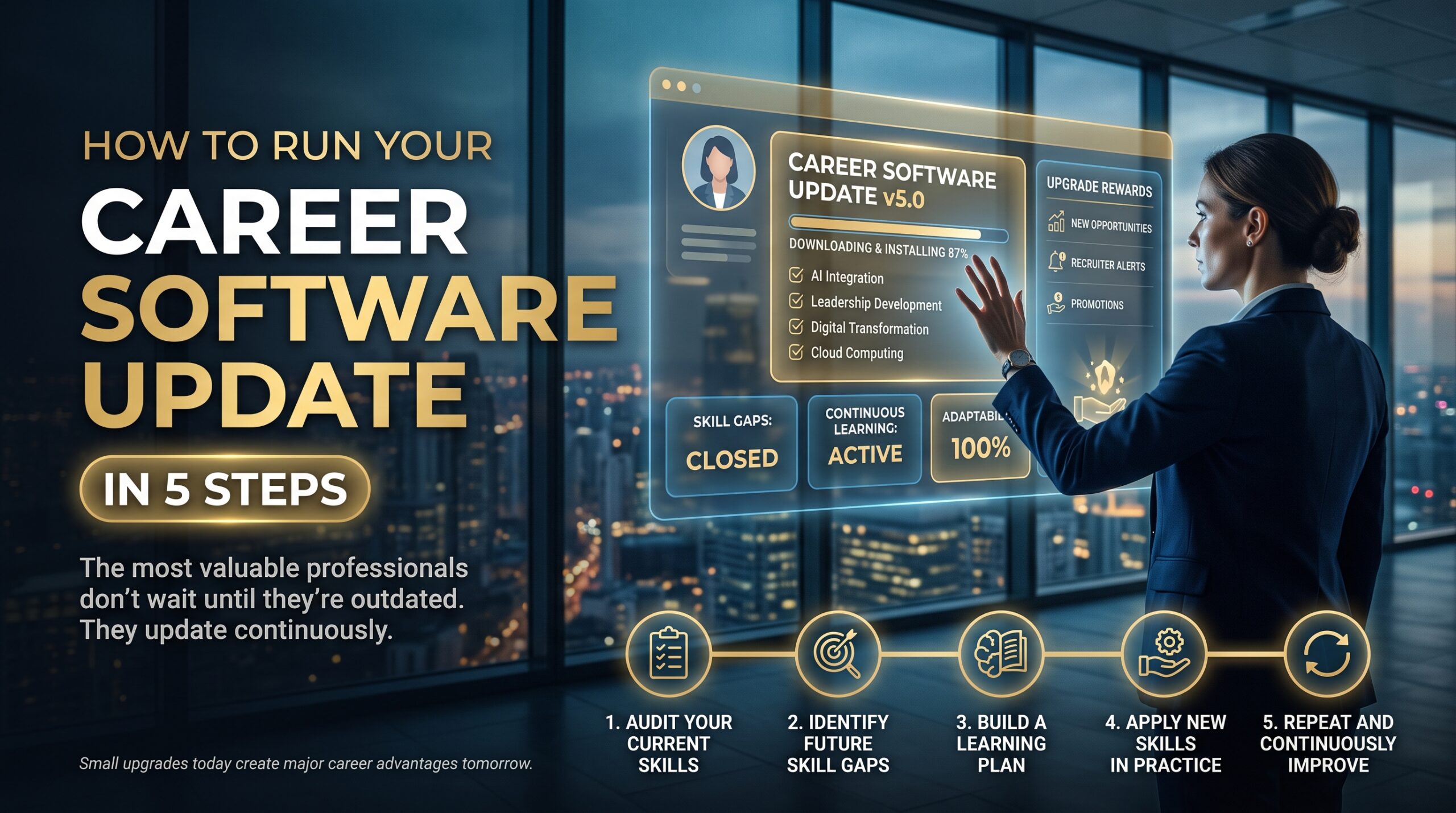
- Audit your current version. List the tools, platforms and certifications you actually use, then mark which are growing, stable or fading.
- Check the market. Read ten job ads for the role you want in two years. Note the skills that appear repeatedly.
- Pick one skill gap. Choose the single biggest gap. Trying to fix everything at once is how updates fail.
- Choose a format that fits your life. Short courses, evening classes and live virtual sessions let you learn while working.
- Apply it immediately. Use the new skill on a real project within 30 days so it sticks, then schedule your next update.
A good rhythm is a small update every quarter and a major upgrade every one to two years. Treat it like a calendar reminder, not a reaction to bad news.
Career Software Update Options in Australian Cities
You do not have to relocate or take leave to upgrade. IT Courses runs training across the country with online, live virtual, classroom and in-house options:
- Sydney: IT courses in Sydney with classroom sessions in Surry Hills.
- Melbourne: IT courses in Melbourne with classes in West Melbourne.
- Brisbane: IT courses in Brisbane delivered from Brisbane City.
- Perth: IT courses in Perth available live online or in-house.
- Adelaide: IT courses in Adelaide available live online or in-house.
- Canberra: IT courses in Canberra available live online or in-house.
Teams in Hobart, Darwin and the Gold Coast can also arrange training, and you can browse every option on the full IT courses list.
Common Mistakes When Updating Your Skills
- Collecting certificates without using them. Learning only counts when you apply it.
- Chasing every trend. Pick skills tied to real demand, not hype.
- Waiting for your employer. Companies help, but your career is yours to maintain.
- Skipping the basics. Foundational courses make advanced topics far easier later.
Career Software Update FAQs
How often should I update my career skills?
Review your skills every three months and complete a meaningful course or certification at least once every one to two years. Fast-moving fields like cloud, security and AI may need more frequent attention.
Do I need an IT background to start?
No. Many foundational programs are designed for beginners, students and career changers, and start with the basics before moving into hands-on labs.
Can I study while working full time?
Yes. Evening, weekend and live virtual classes are built for working professionals, so you can upgrade without pausing your income.
Which course is best for a career software update?
It depends on your goal. Cyber security, cloud and AI are strong picks for growth, while SQL and web development suit people who want practical technical skills quickly. Compare options on the courses page or contact the team for advice.
Final Thoughts: Install Your Next Career Software Update
The career software update principle is not about fear. It is about staying in control of your own growth. Small, regular upgrades keep your skills relevant, your income steady and your options open, no matter how quickly technology moves.
Ready to upgrade? Explore the IT courses available across Australia, read more on the IT Courses blog, or call 1300 649 299 to talk to the team about the right pathway for you.