



You apply. You wait. You get the polite rejection email or worse, silence. It happens again on the next role, and the one after that. If you have ever wondered why employers keep hiring other candidates instead of you, you are not alone, and it is rarely about bad luck. Hiring managers in Australia’s IT sector are working from a checklist you cannot see: specific skills, proof of practical experience, certifications, and small interview signals that separate a shortlist from a rejection pile. This guide unpacks exactly what employers know that most job seekers don’t, and what you can start doing this week to close the gap.
The Real Reason Why Employers Keep Hiring Other Candidates
Most candidates assume hiring comes down to experience alone. In reality, employers are comparing applicants against a very specific, very current picture of the role the tools a team uses today, the certifications a client contract requires, and the ramp-up time a new hire needs before they are productive. When two candidates look similar on paper, the one who can demonstrate hands-on, current skills usually wins. That is why employers keep hiring other candidates who may have less overall experience but clearer, more recent proof that they can do the job from day one.
It’s Not Just Your Resume It’s the Skills Gap
A well-formatted resume gets you noticed. It does not get you hired. Recruiters and hiring managers routinely report that the biggest barrier to filling technology roles is not a shortage of applicants, but a shortage of applicants with the right, verifiable skills. According to Jobs and Skills Australia, roughly a third of assessed occupations nationally are currently classified as being in skills shortage (read the report), with technology and professional roles among the most affected. In other words, the jobs exist but employers keep hiring other candidates because too few applicants can show up-to-date, practical proficiency in the tools those jobs actually require.
- Listing a skill you learned years ago without recent practice
- No evidence of hands-on labs, projects, or certifications
- Generic resumes that don’t match the specific tech stack in the job ad
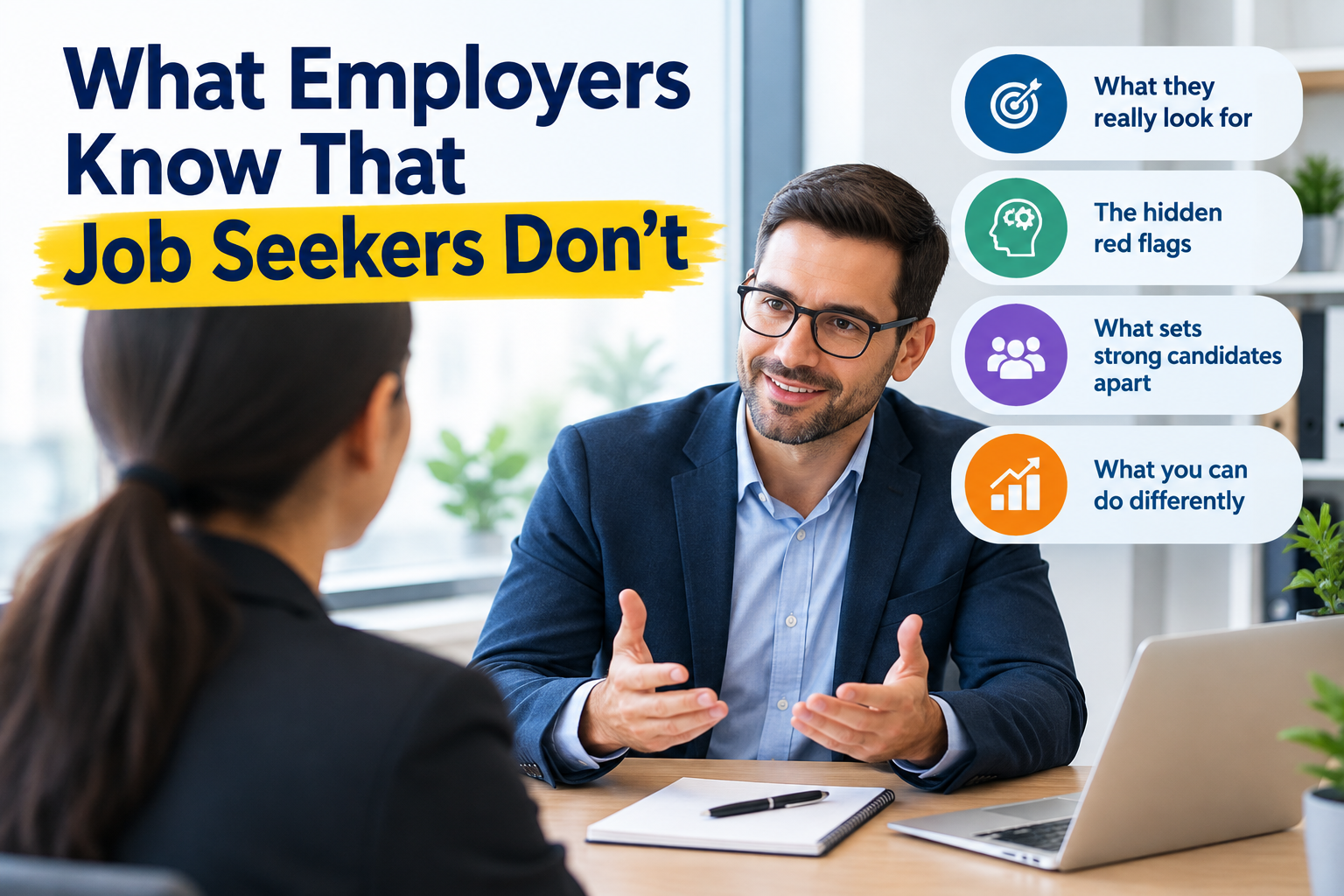
What Employers Know That Job Seekers Don’t
Hiring managers read applications differently to how most candidates write them. Three things consistently move a candidate from ‘maybe’ to ‘yes’:
1. Certifications close credibility gaps fast
A recognised certification tells an employer, in seconds, that you have been tested against an industry standard not just that you claim to know something. It is one of the fastest ways to offset limited on-the-job experience.
2. Practical, project-based proof beats theory
Employers increasingly ask for evidence: a lab you completed, a system you configured, a portfolio project. Courses built around hands-on labs and real-world scenarios give you exactly this kind of proof.
3. Soft skills and interview readiness are a filter, not a bonus
Communication, problem-solving under pressure, and the ability to explain technical decisions clearly are often what separate two similarly-skilled finalists. Employers keep hiring other candidates who can talk through their reasoning, not just recite facts.
The Certification and Portfolio Advantage
If you are asking why employers keep hiring other candidates over you, start by auditing what you can actually prove. Structured, certification-aligned training such as AWS Technical Essentials, Cyber Security Course, SQL Database Training, or the CCNA Certification Training Course gives you a certificate, a portfolio-ready project, and language to use confidently in interviews. Employers do not just want to hear that you are capable; they want to see it.
Soft Skills and Interview Readiness Employers Notice
Technical skills get you shortlisted. How you present them in an interview gets you hired. Employers consistently notice candidates who can:
- Explain a technical decision in plain language a non-technical manager can follow
- Give a specific example instead of a vague generalisation
- Ask informed questions about the team’s tools, projects, and priorities
- Show they have researched the company and the role, not just applied broadly
Resources such as SEEK’s Career Advice hub are a useful free supplement for polishing resumes, cover letters, and interview technique alongside your technical upskilling.
Closing the Gap: How Job Seekers in Sydney, Melbourne, Brisbane, Perth, Adelaide and Canberra Are Getting Hired Faster
Local hiring patterns matter too. Demand for cloud, cybersecurity, data and networking skills varies city to city, and employers in each market are looking for candidates trained on the platforms local businesses actually use. Job seekers taking structured IT courses in Sydney, Melbourne, Brisbane, Perth, Adelaide, and Canberra report a clear pattern: once they can point to a certification and a hands-on project, callbacks increase. It stops being a mystery why employers keep hiring other candidates, because you become the candidate with the proof.
IT Courses That Help You Stand Out From Other Candidates
Closing the skills gap does not require years back in study. Short, focused, practical courses can be completed alongside work or job hunting. Popular options include the Web Development Course for building and deploying real projects, Artificial Intelligence (AI) Essentials for one of the fastest-growing skill demands, and the Business Analyst Certification for candidates moving toward client-facing, process-focused IT roles. Each pairs practical labs with a credential you can list on your resume and LinkedIn profile immediately. Browse the full course catalogue to match a course to the roles you are actually applying for.
Final Thoughts: Stop Guessing Why Employers Keep Hiring Other Candidates
Every rejection feels personal, but the pattern behind it usually isn’t. Employers hire the candidate who removes the most doubt the one with a current certification, a demonstrable project, and the communication skills to back it up in an interview. Once you know what employers actually know, you can start closing the gap deliberately instead of guessing.
Ready to become the candidate employers choose? Explore IT courses across Australia or get in touch to find the right course for your next role.